Mold is a naturally occurring organism found in virtually every environment. Outdoors, it plays a valuable role in breaking down organic matter. Indoors, however, mold growth presents serious risks to both human health and structural integrity. In Indio, California, where periods of humidity and water intrusion events can create prime conditions for mold development, understanding Mold Remediation Indigo is important for any property owner.
What Is Mold and How Does It Develop Indoors?
Mold is a type of fungus that reproduces through microscopic spores. These spores are present in both outdoor and indoor air at all times, at low background levels. The problem begins when mold spores encounter a combination of three things: moisture, a food source (organic materials such as wood, drywall, or fabric), and relatively warm temperatures. Indio’s warm climate means that temperature is rarely a limiting factor moisture control becomes the critical variable.
Indoor mold growth typically begins within 24 to 48 hours of a moisture event a water leak, flooding, or even persistent condensation. It can start behind walls, under flooring, or above ceiling tiles in areas that are difficult to see but ideal for mold because they tend to be undisturbed and have limited airflow.
Health Implications of Indoor Mold
Exposure to elevated concentrations of indoor mold spores can cause a range of health effects. For most people, symptoms resemble allergic reactions nasal congestion, coughing, sneezing, eye irritation, and skin rash. For individuals with asthma, existing respiratory conditions, or compromised immune systems, mold exposure can trigger more significant respiratory reactions.
Certain mold species produce mycotoxins compounds that can be more acutely harmful. The presence of mycotoxin-producing molds, sometimes colloquially called black mold, requires particularly thorough remediation under strict safety protocols. However, it is important to note that no mold type should be left unaddressed all indoor mold growth warrants professional evaluation and removal.
The Difference Between Mold Removal and Mold Remediation
These terms are often used interchangeably, but they describe different scopes of work. Mold removal simply refers to the physical act of removing mold from a surface. Mold remediation is a more comprehensive process that includes identifying the source of moisture that enabled mold growth, containing the affected area to prevent cross-contamination, removing mold-affected materials, treating surfaces with antimicrobial agents, and verifying through post-remediation testing that mold levels have returned to acceptable levels.
True remediation addresses the underlying moisture problem without which mold will simply return. This is why experienced remediation professionals treat source control and drying as essential components of their work, not optional add-ons.
The Mold Remediation Process in Detail
A professional mold remediation project begins with a thorough inspection. Using moisture meters, infrared cameras, and air sampling equipment, certified technicians map the extent of mold growth and identify hidden moisture sources. This assessment informs the remediation plan.
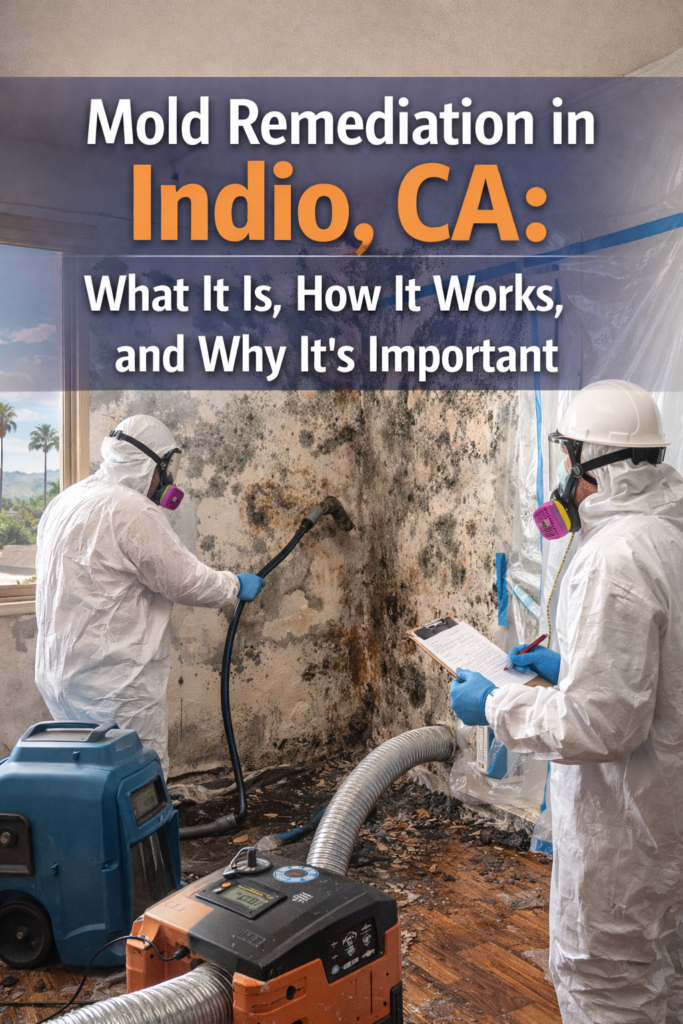
Containment is established before any removal work begins. Plastic sheeting and negative air pressure systems prevent mold spores disturbed during removal from spreading to unaffected areas of the building. Technicians wear appropriate personal protective equipment throughout this phase.
Affected porous materials drywall, insulation, carpet, wood with deep penetration are carefully removed and disposed of per EPA and local guidelines. Non-porous surfaces are treated with antimicrobial solutions. The area is then thoroughly dried using professional drying equipment. After completion, post-remediation testing verifies that airborne mold spore counts have returned to levels consistent with normal outdoor background levels.
Mold in Indio’s Desert Climate: A Paradox Explained
Many people assume that desert climates like Indio’s are naturally resistant to mold because of the heat and low humidity. This is partially true outdoors. Indoors, however, mold problems are surprisingly common because interior water intrusion events (pipe leaks, roof penetrations, appliance failures, HVAC condensation) introduce the moisture that desert air lacks, and the heat accelerates mold growth once conditions are established.
Evaporative coolers, commonly used in desert climates, also introduce humidity into interior spaces and require regular maintenance to prevent them from becoming mold sources. Understanding these local nuances helps property owners in Indio take targeted preventive action.